THE APPLICATION
Where this service fits
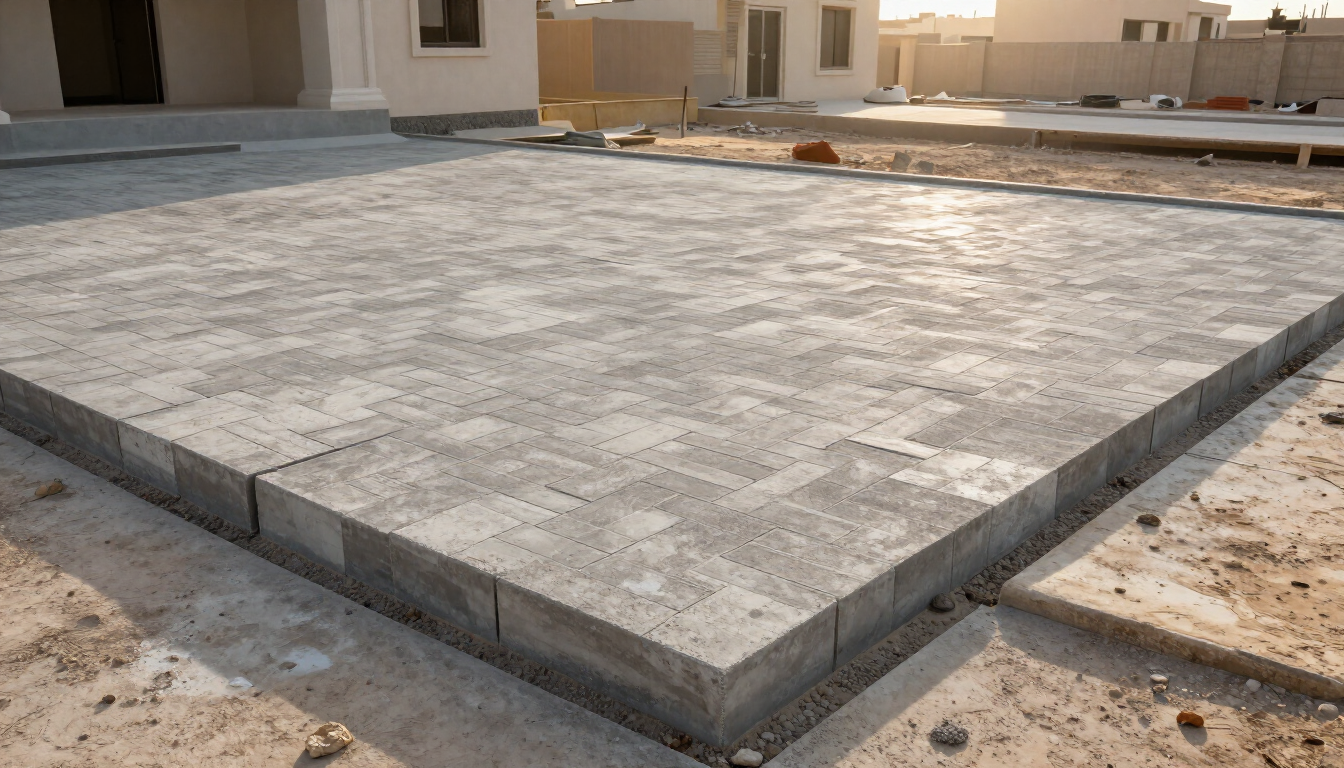
Interlock paving uses individual concrete pavers laid over a prepared base. A successful installation depends as much on drainage, edge restraint and compaction as on the pattern you choose.
- Villa driveways and parking areas
- Pedestrian paths and courtyard paving
- Landscape borders and access routes
THE WORK
A typical scope, clearly defined
Use this sequence to discuss your requirements. The final specification depends on a site assessment and any relevant design.
- 01
Assess ground levels, vehicle loads and drainage outlets.
- 02
Excavate and compact an appropriate sub-base.
- 03
Install edge restraints, bedding and the agreed paving pattern.
- 04
Compact the finished paving, fill joints and check falls.
BEFORE YOU APPOINT A CONTRACTOR
What to check in a proposal
- Paver thickness matched to pedestrian or vehicle use
- Sub-base specification and compaction method
- Drainage falls and access to buried utilities
- Sample colour, joint sand and edge details
Ask for inclusions and exclusions in writing, including preparation, access, protection, disposal and handover. Check the qualifications and approvals relevant to the work; no price or completion time can be established from a generic guide.
Read the project-brief checklistCOMMON QUESTIONS
Interlock paving: frequently asked questions
Can interlock paving be used for a driveway?
Yes, when the paver thickness, compacted base and edge restraints are designed for the expected vehicle loads. A pedestrian paving specification should not be assumed suitable for vehicles.
Can existing interlock pavers be reused?
Sound pavers can sometimes be lifted and relaid. The contractor should check breakage, colour consistency, base condition and the cost of cleaning and replacing damaged units.
FURTHER READING
Make a more informed decision
LOCATION GUIDES
Interlock paving across Saudi Arabia
Each city guide addresses local planning considerations. Confirm the actual site conditions and requirements before starting work.