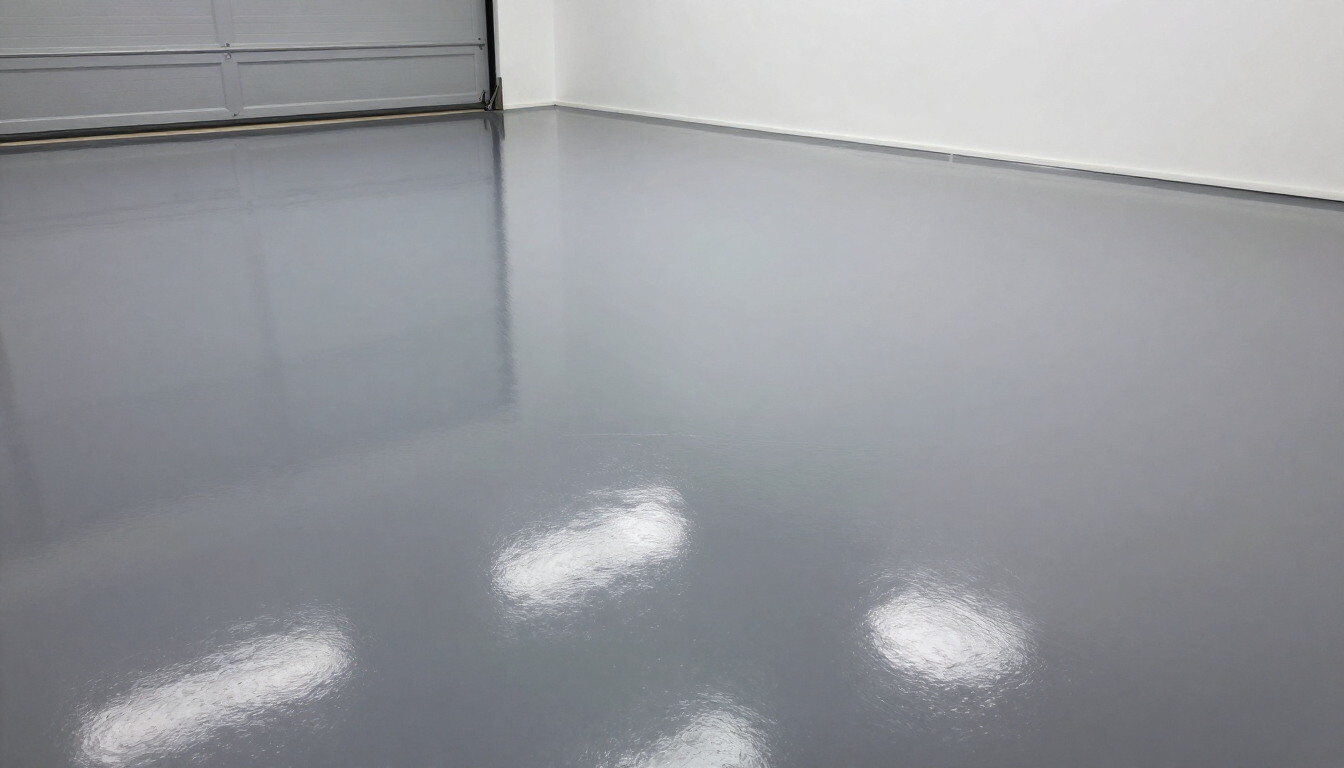
THE APPLICATION
Where this service fits
Epoxy flooring is a resin system applied over a prepared substrate. Adhesion, moisture tolerance, slip resistance and the required build thickness are more important than colour alone.
- Garages and workshops
- Commercial kitchens and utility rooms
- Warehouses and indoor service areas
THE WORK
A typical scope, clearly defined
Use this sequence to discuss your requirements. The final specification depends on a site assessment and any relevant design.
- 01
Test the substrate for moisture, strength and contamination.
- 02
Mechanically prepare the surface and repair suitable defects.
- 03
Apply compatible primer and the specified resin build-up.
- 04
Check coverage, texture, curing and return-to-service requirements.
BEFORE YOU APPOINT A CONTRACTOR
What to check in a proposal
- Moisture test results and substrate preparation
- System thickness and chemical resistance
- Slip resistance for wet or oily areas
- UV exposure and manufacturer limitations
Ask for inclusions and exclusions in writing, including preparation, access, protection, disposal and handover. Check the qualifications and approvals relevant to the work; no price or completion time can be established from a generic guide.
Read the project-brief checklistCOMMON QUESTIONS
Epoxy flooring: frequently asked questions
Is epoxy flooring suitable outdoors?
Standard epoxy may discolour or degrade under UV exposure. Outdoor use needs a system explicitly approved for those conditions, often with a different resin or protective topcoat.
Can epoxy cover cracks?
Static defects may be repaired before coating, but active cracks and movement joints need designed details. A coating should not be used to hide an unresolved structural problem.
FURTHER READING
Make a more informed decision
LOCATION GUIDES
Epoxy flooring across Saudi Arabia
Each city guide addresses local planning considerations. Confirm the actual site conditions and requirements before starting work.